Pest Control Video Ads: Seasonal Hooks, Inspections, Results
The pest control video ads that book jobs are short (15 to 30 seconds), seasonal and filmed on real service calls: a technician pointing a flashlight at mud tubes on a sill plate, a gloved hand pulling back insulation to show rodent droppings, then the same spot sealed and clean. Run the pest that's active right now in your area, show proof without turning stomachs, and never call a pesticide "safe" or "non-toxic." Three or four new ads each season, cut from footage your technicians shoot on their phones, beats one polished brand spot all year.
The steps below show how an ad comes together from phone clips. After that: the calendar, the shot list, before and after rules, and what not to show.
How to make a pest control ad in Rend, step by step
These screenshots are from Rend's demo of a 15-second eye cream ad; a pest control ad works the same way, with your technician's clips and a competitor ad you like.
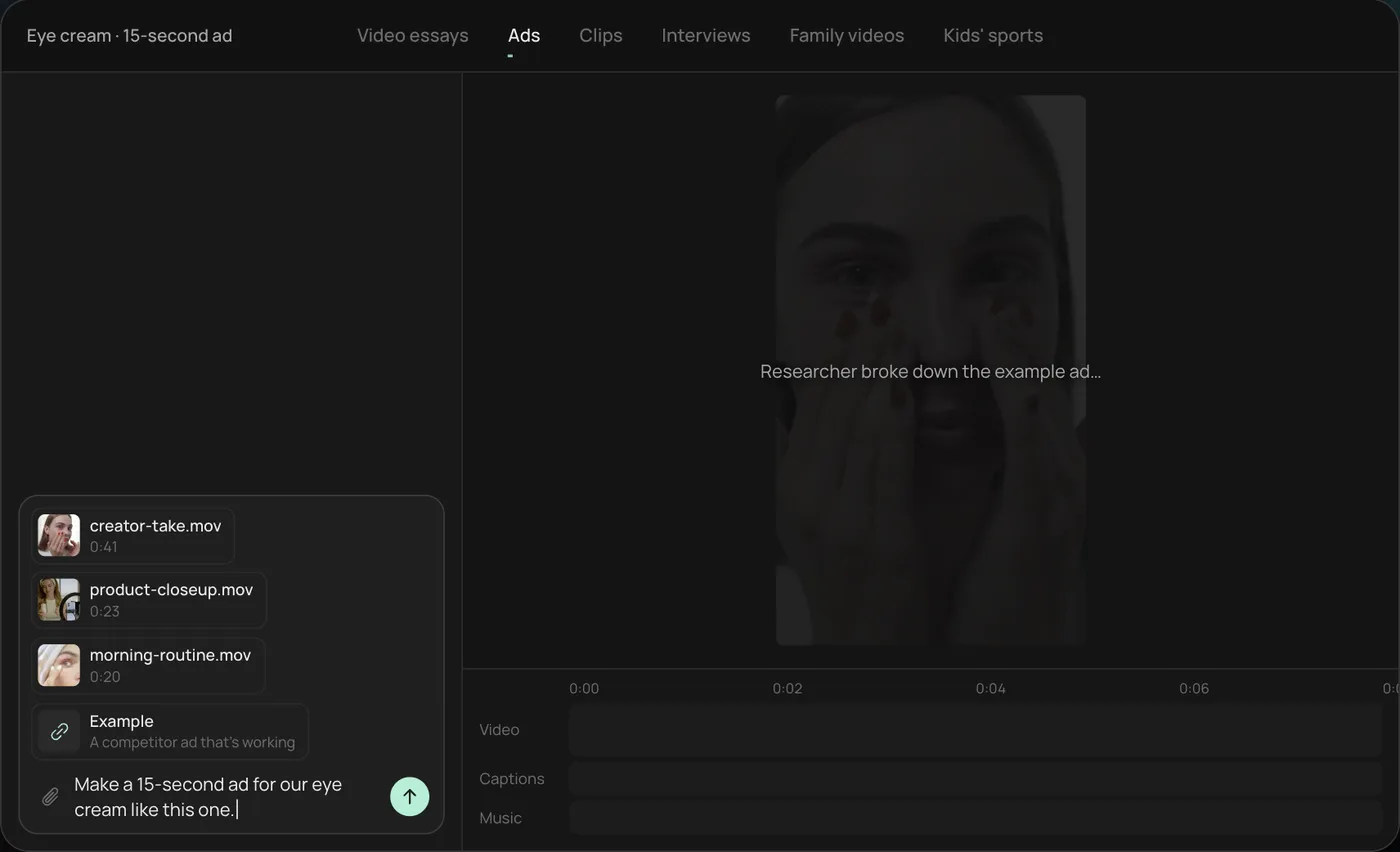
1. Drop your clips and an example. Add your phone clips (in the demo a creator take, a product close-up and a morning routine) plus a competitor ad you like, then type what you want, the way the demo asks: "Make a 15-second ad for our eye cream like this one."
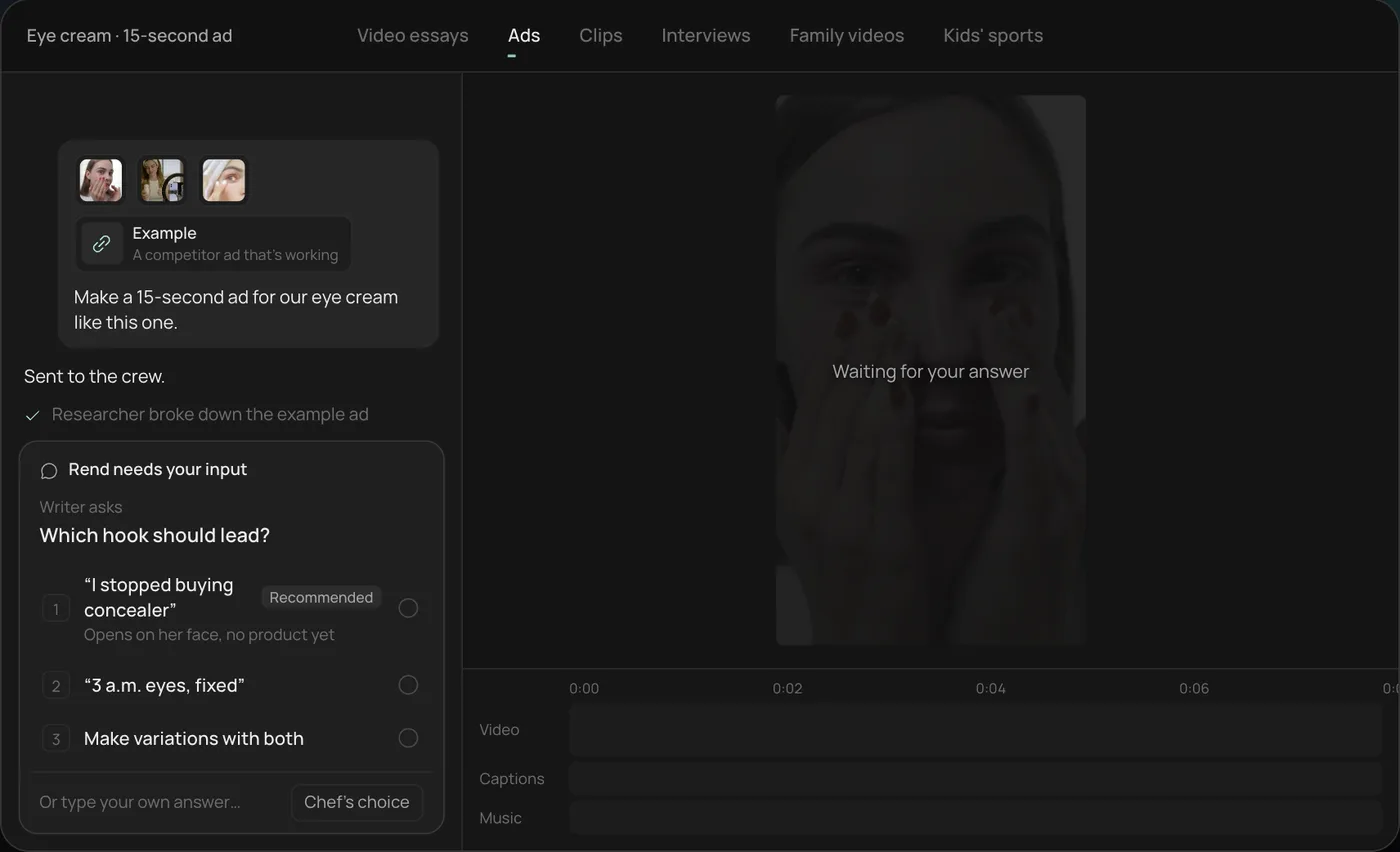
2. Answer the one question. Rend asks which hook should lead and marks a recommended answer. You can also ask it to make variations with both.
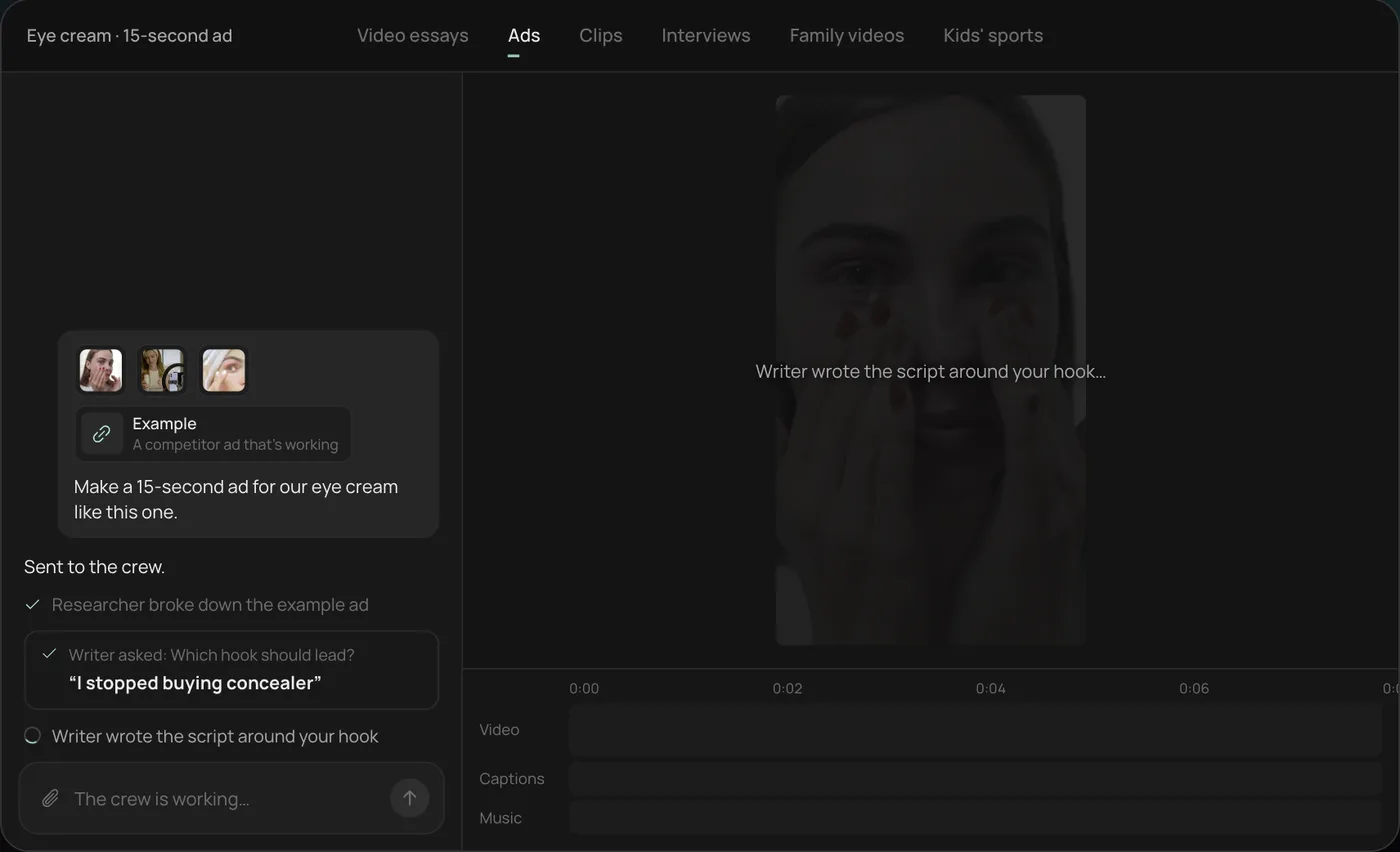
3. Let the crew work. The researcher breaks down the example ad and the writer builds the script around your hook, checking off each step in chat.
4. Open the finished ad. A 15-second vertical ad lands on a real timeline with captions and music on their own tracks, and Rend offers six more hooks to test.
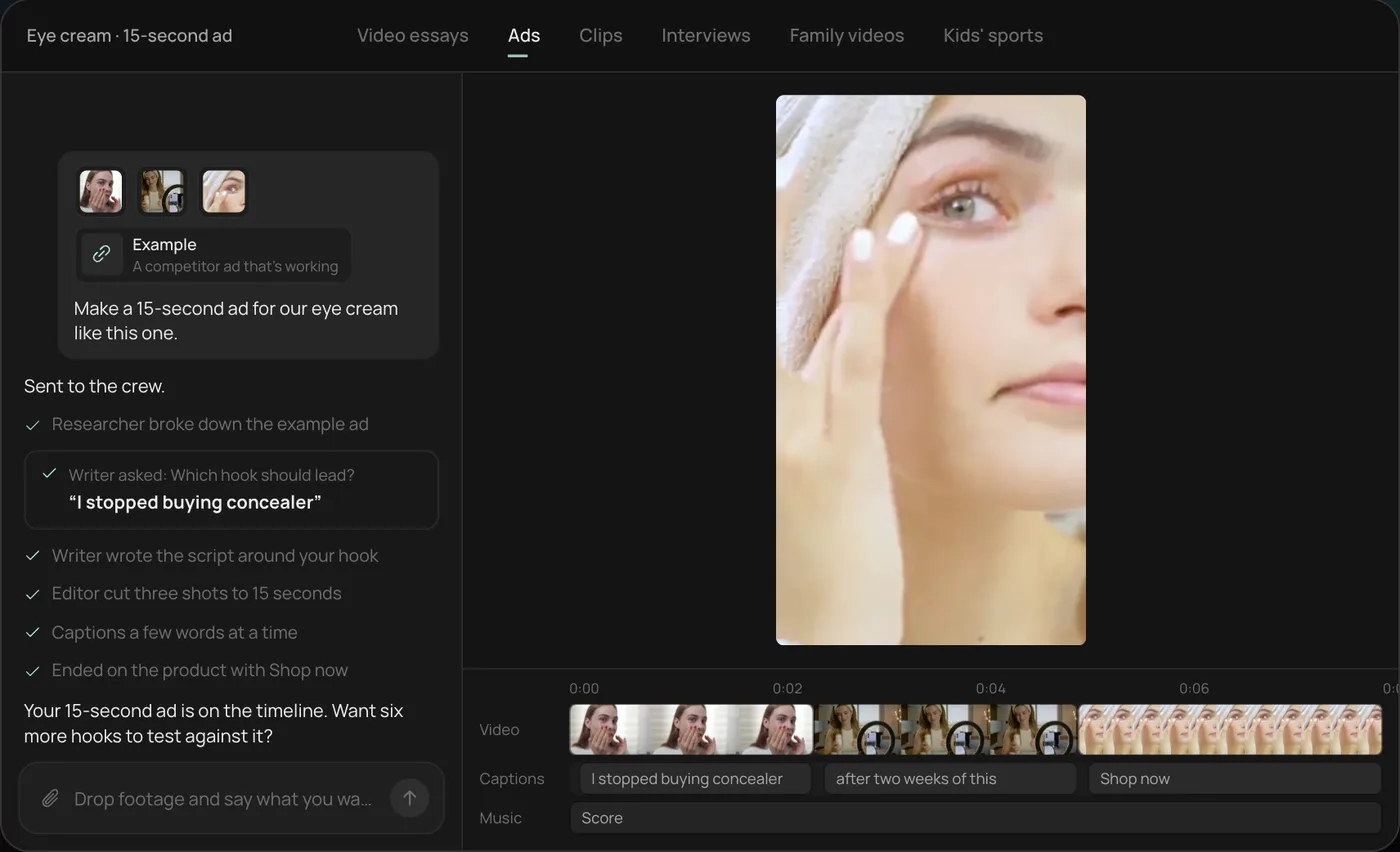
From there you can open the timeline and change anything by hand, share a review link with the owner or office manager, or export. For a pest company, swap in a termite inspection clip and a mosquito yard treatment and you have the start of a season's ad set. Start a free Rend project to try it on your own footage.
Why seasonal ads win
People don't shop for pest control. They shop the day they see a mouse in the pantry or a swarm of winged ants by the back door. Your ad has to be in front of them that week, and it has to name the thing they just saw.
That's why a single generic "Call us for all your pest needs" spot underperforms. An ad that opens on termite swarmers on a windowsill in March, in a city where they swarm in March, reads as a direct answer.
The seasonal calendar
Timing varies a lot by region, so adjust this to what your technicians are seeing on calls. Your own call log from last year is the best guide: sort it by pest and month.
| Season | Pests that drive calls in many US regions | Ad angle | Footage to have ready |
|---|---|---|---|
| Late winter to spring | Termite swarmers, ants, overwintering pests waking up | "Saw winged bugs by a window?" | Swarmers on a sill, mud tubes, inspection with a flashlight |
| Late spring to summer | Mosquitoes, ants, wasps, ticks, fleas | Backyard you can use again | Yard treatment, nest removal from a distance, kids' swing set in a treated yard |
| Late summer to fall | Stinging insects at peak, spiders, stink bugs, early rodents | Seal it up before it gets cold | Exclusion work, sealing gaps, door sweeps |
| Fall to winter | Mice, rats, roaches indoors | "Hear scratching in the walls at night?" | Attic and crawlspace inspection, droppings (brief), traps placed, sealed entry points |
| All year | Bed bugs, roaches | Discreet, fast service | Unmarked truck if you run one, technician inspecting a mattress seam |
Film for the next season while you're in this one. Rodent exclusion footage shot in October is your January ad.
What to film on every job
Give technicians a short list and a phone mount. Ten seconds per shot, steady, in good light. Ask before filming inside any home, and keep house numbers, family photos and faces out unless the homeowner agrees in writing.
- Pulling up and walking to the door in uniform (exterior, house number out of frame)
- The technician explaining what they're looking for, one sentence, to camera
- Flashlight on the problem: mud tubes, gnaw marks, a gap under siding, a nest under an eave
- A measurement or tool in use: moisture meter on a joist, a caulk gun on a gap, bait station placement
- The fix: the gap sealed, the station placed, the nest gone
- The technician's wrap-up, one sentence: what they did and what to watch for
- A slow wide of the finished spot
That's a full ad from one call. Five calls a week is twenty ads a month if you cut them well.
Before and after footage, done honestly
Before and after is the most persuasive thing you can show, and the easiest to get wrong.
- Shoot both from the same angle and distance. Mark the spot with tape if you need to.
- Show the same place, same day for exclusion work, or with a dated follow-up for infestations. Put the gap in time on screen ("Follow-up visit, 3 weeks later").
- Don't stage it. A "before" with extra droppings scattered for effect is the kind of thing that ends up in a one-star review.
- Don't imply a guarantee you don't offer. If your service plan includes free re-treatments, say that instead of "gone for good."
Our guide to contractor before and after videos has more on matching angles and timing.
What not to show
Graphic close-ups. Meta's Advertising Standards prohibit shocking or sensational content in ads, and its violent and graphic content policy specifically lists imagery of insects such as maggots or worms coming out of living animals. Beyond policy, a tight shot of a roach nest makes viewers scroll away before they read your name. Keep pests small in the frame, brief (a second or two), and let the technician's reaction carry it.
Dead animals and traps with catches. Show the trap placed, never the result.
Spraying near people, pets or food. Even when the label allows it, it reads as dangerous. Show applications outdoors, at the foundation, or with no one in frame.
Safety claims. EPA's guidance says it doesn't approve claims that a pesticide is "safe," and calls "non-toxic" misleading for pesticides, since a pesticide has to be toxic to the pest. Service companies that only apply products fall mostly under the FTC's general truth-in-advertising rules and state pesticide regulators, and many states restrict words like "safe," "harmless" and "non-toxic" in pesticide advertising, so check your state's rules before you use them. Say what you actually do: "We use targeted treatments and tell you exactly what we applied and where."
Other customers' homes, identifiably. A recognizable house with "bed bugs" in the caption is a privacy problem and a lawsuit waiting to happen.
Hooks that work for pest control
The first two seconds name the pest and the moment. Some starting points (test several):
| Hook on screen | Pest | Opening shot |
|---|---|---|
| "Winged ants by your window? Read this." | Termites | Swarmers on a sill |
| "That scratching in the wall at 2 AM" | Rodents | Flashlight in an attic |
| "Take your backyard back this summer" | Mosquitoes | Family on a patio at dusk |
| "We found this behind a dishwasher" | Roaches | Technician's face reacting, pest small in frame |
| "The gap a mouse fits through is smaller than you think" | Rodents | A pen next to a gap in siding |
| "Wasp nest over the front door?" | Stinging insects | Nest under an eave, wide |
For a longer list and how to test them, see video ad hooks.
Where to run them
| Placement | Shape | Length | Notes |
|---|---|---|---|
| Facebook and Instagram feed | 4:5 | 15 to 30 s | Target your service area by ZIP |
| Reels and Stories | 9:16 | 15 s | Keep text inside the safe zone |
| YouTube in-stream | 16:9 | 15 to 30 s | Name the pest before the skip button appears |
| Google Business Profile | Up to 30 s | 30 s | Google's help center caps uploads at 30 s and 75 MB |
| Nextdoor and local sites | 16:9 or 1:1 | 15 to 30 s | Neighborhood framing works well |
Pest control is one of the categories Google Local Services Ads cover, where you pay per lead and your listing shows at the top of search. Those listings don't play your video, but your Business Profile can. Check every size and safe zone with the video ad size checker, and the full list is in our video ad sizes guide.
Making ten ads from one week of footage
Once technicians are filming, the work is the edit. A week of service calls gives you more than enough for a season:
- Pick the season's two or three pests.
- For each, pick the strongest problem shot, fix shot and technician line.
- Write three hooks per pest.
- Cut each hook into 15 and 30 second versions in 9:16 and 4:5.
That's 36 files from three pests. Run the strongest hooks with a small budget, kill the weak ones after a week, and replace them with fresh footage. Mass ad creation covers the testing side, and video ads for local businesses covers budgets and ZIP targeting. Before anything goes live, run it through the ad video review checklist.
How Rend fits a pest company
Technicians send clips from their phones by chat, email or a web form. Rend cuts the ad around the hook you pick, adds word-timed captions in your brand style, your logo and phone number on the end card, music and sound on separate tracks, then spins new hooks, sizes and image ads from the same footage. A brand kit keeps every ad in your truck colors and fonts. The owner leaves notes on the review link at the exact frame ("blur that house number"), and the agent makes the fix. Download the set for your own ad accounts, or hand it to Rend Boost to run, which is in early access.
Where Rend isn't the answer: it won't film the job for you, and it won't make a pest problem look real if you don't have the footage. Generated shots of insects tend to look wrong to anyone who's seen the real thing, so use real inspection clips for anything that shows a pest. Editing is free and you pay when Rend renders or generates something; see pricing. Home service companies with similar seasons should also read HVAC and plumbing video ads and landscaping and lawn care videos.
FAQ
How long should a pest control video ad be?
Fifteen to 30 seconds. Name the pest in the first two seconds, show the problem and the fix, and end on your phone number and service area.
What should pest control ads show?
Real inspection footage: a technician finding the problem, the fix, and the result from the same angle. Keep pests small and brief in the frame.
Can I say our treatments are safe for kids and pets?
Avoid it. EPA doesn't approve safety claims for pesticides and calls "non-toxic" misleading, and such claims have drawn complaints against pest companies. Describe what you apply and how instead.
Will Facebook reject gross pest footage?
It can. Meta's ad standards bar shocking or sensational content, and graphic close-ups also drive viewers away. Wide shots and short glimpses work better.
When should I run termite ads?
When swarmers appear in your region, usually late winter to spring in much of the US. Check last year's call log for your area's exact weeks.
Do I need a videographer?
No. Technicians with a phone and a short shot list get better footage than a crew, because they're there when the problem is.
Have your technicians send this week's clips and Rend will cut a set of seasonal ads you can review and change before they run. Start free here.